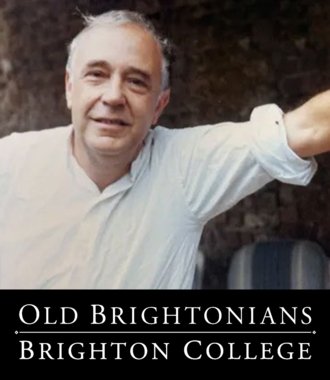
We are deeply saddened by the news of the death of Lord Skidelsky, our former Chair of Governors, who died on April 15, aged 86. In his 13 years leading the school’s board, his thoughtful leadership and deep commitment to the College helped shape its direction and ethos in lasting ways.
The Principal, Richard Cairns said, “He shared my conviction that Brighton could indeed become one of the great schools of the UK and, importantly, he understood what we mean by ‘greatness’ in a school setting: a community of young people who, through their studies and co-curricular endeavours, and inspired by high-quality teachers, achieve more than anyone thought possible.”
We have posted a copy his obituary in The Times below.
______
The Times - Lord Skidelsky obituary: leading historian of Keynes
Historian and foremost authority on the British economist John Maynard Keynes who was founding chairman of the Social Market Foundation, dies aged 86.
Robert Skidelsky wrote the second and third volumes of his acclaimed biography of John Maynard Keynes at the great economist’s desk.
In 1986 he had moved into the historic property near Lewes, East Sussex, once owned by one of the 20th century’s most influential economists, and made it his home for the next 20 years. “One of the reasons why Professor Lord Skidelsky is such a successful biographer is his ability to get inside his subjects, imagining himself in their shoes, admiring their best qualities,” wrote The Times in a profile of Skidelsky in 2001.
Unsurprisingly perhaps, his multi-award-winning account of the founding father of macroeconomics was sympathetic to the man and his interventionist economic philosophy, but, reviewers averred, no less authoritative for that.
In the three volumes published between 1983 and 2000, he demonstrated Keynes’s journey: resigning from the British government after the First World War because of the crippling economic reparations that the Allies imposed on Germany, recommending government spending in response to the Great Depression of the 1930s, and his vital mission in ailing health to Washington in late 1945 to secure a huge loan to keep the British economy afloat.
“He was a kind of Confucius behind the political façade. He was the greatest economist of the 20th century. He was also one of the greatest minds because he was more than an economist,” wrote Skidelsky, a mercurial figure who, like Keynes, waded fearlessly into the political debates of the present day. “He showed governments a way of preventing economic collapses such as the Great Depression of the 1930s. In Germany there were six million unemployed when Hitler came to power, so in order to prevent these extreme political events you had to be able to stop depressions. That was I think the lesson he taught and I think it was adopted by most governments. We haven’t had any repetition of that type of calamitous event since the 1930s.”
While sitting at Keynes’s desk Skidelsky would put his palms together like his hero and think about how to solve the country’s problems. To that end, having been elevated to the peerage for the “continuing” Social Democratic Party in 1991, he started to apply Keynesian thinking to British economic and social policy as the founding chairman of the Social Market Foundation. What was described as John Major’s favourite think tank aimed to find a third way between “pro-market orientation and concern for social justice” and would later influence the New Labour project.
Robert Jacob Alexander Skidelsky was born in the city of Harbin, in the Japanese-occupied Chinese province of Manchuria in 1939. He was born into a Russian family that was Jewish on his father’s side and Christian on his mother’s; his parents had fled Russia after the revolution in 1917 and had become British subjects. “It was family lore that my father had bought £6 million in cash from Russia. But we lost it all in the 1929 stock market crash. We are victims of communism and capitalism alike,” Skidelsky told The Times in 1989.
Skidelsky’s parternal grandfather had masterminded the building of the last stretch of the Trans-Siberian railway to Vladivostok. His father Boris worked for the family firm, LS Skidelsky, which leased the largest coalmine in Manchuria from the Chinese government. His mother was Galia (née Sapelkin).
After Japan joined the Second World War, the family were interned and settled in Britain in 1942 as part of a prisoner swap. After the war they returned to China, where they still owned property, but soon left before the communists swept to power in 1949.
Robert boarded at Brighton College and decades later would chair its board of governors during a period when it became one of the country’s top-performing schools. He read history at Jesus College, Oxford, studied for a doctorate and became a research fellow at Nuffield College, Oxford where he developed a lifelong passion for educational reform. It was while working on his first book on the government’s response to the Great Depression that Keynes “started to loom large” because “he seemed to have very good answers to the slump that were never adopted”.
In 1970 Skidelsky married Augusta Hope, who managed the alternative Portable Theatre Company, which had been set up by Tony Bicât and David Hare. She survives him along with their children, Edward, a lecturer in philosophy at Exeter University; William, former literary editor of The Observer and the author of Federer and Me: A Story of Obsession; and Juliet, a school teacher and therapist.
From 1970 to 1976 he was an associate professor at the School of Advanced International Studies at Johns Hopkins University in Washington, but was reportedly denied full tenure because of his 1975 biography of the British fascist leader Oswald Mosley. The book was criticised for being lenient on Mosley’s antisemitism, while praising his advocacy of a British “New Deal” in response to the Wall Street Crash while serving in Ramsay MacDonald’s Labour cabinet.
Skidelsky visited the former leader of the British Union of Fascists several times at his home in Paris and even Mosley himself admitted that he thought the book portrayed him in a “romantic” light. Skidelsky was also said to have been “blackballed” by Oxford University because of the book.
“I said to myself, I will show the buggers,” Skidelsky later recalled. While establishing himself as a bestselling author and entering the world of politics, he also became professor of international studies and then professor of political economy at the University of Warwick from 1978 to 2006.
Skidelsky left the Labour Party in 1981 to become a founding member of the Social Democratic Party, staying loyal to his close friend David Owen and remaining with the Continuing SDP after the merger of the SDP with the Liberals in 1988. He was ennobled as Lord Skidelsky of Tilton in 1991 and after the dissolution of the SDP a year later he joined the Conservatives, having once scandalised centre-left colleagues by stating that Mrs Thatcher had given the country “a chance to cure itself”. He advised John Major’s government on school reform, but his proposal to drive up standards by “semi-privatising” state schools was rejected as too radical.
He later served in the Lords as opposition spokesman on the Treasury, but was sacked by William Hague, then Tory leader, for his opposition to Nato’s bombing of Serbia and Montenegro in 1999 to stop the ethnic cleansing of Albanians in Kosovo. He became a crossbench peer in 2001 in protest at what he perceived as the Tory leadership’s lurch towards Euroscepticism.
By then his life of Keynes was complete. Volume II, The Economist as Saviour, 1920–1937, won the Wolfson History Prize in 1992, and Volume III, Fighting for Freedom, 1937–1946 (2000), won the Duff Cooper Prize among others. Volume I, Hopes Betrayed, was particularly worth a read according to Skidelsky’s wife, because that was “the one with all the sex in it”.
Skidelsky advocated a return to Keynesian principles to deal with the global economic crisis in his book Return of the Master (2009). The London School of Economics said in its review: “The author’s zeal for skewering the opponents of Keynesianism tends to go a bit far. Rational expectations are dismissed as motivated ‘mainly by a hatred of government’. There is little discussion of what made Keynesian activism self-defeatingly prone to complacency and profligacy by the governments which practised it.”
Skidelsky next cowrote with his son Edward How Much is Enough? Money and the Good Life (2012), which examined the idea of continual economic growth that had been expected to flow from Enlightenment rationalism. “It was a critique of economic growth through the prism of Keynes and Aristotle,” said Edward. “He provided economics, I provided philosophy.” The result was a bestseller, translated into 12 languages. “He was endlessly inquisitive always coming up with ideas. I had to rein him back a bit,” Edward added.
Skidelsky’s later books included Britain in the 20th Century: A Success? (2014) and The Machine Age (2023), which examined the dystopian prospect of humanity’s fractured relationship with machines, the prospect of mass redundancy in the AI age and of “Big Brother” surveillance.
In later years Skidelsky relearnt the Russian he had long forgotten since childhood. From 2008, Skidelsky was a non-executive director of Sistema, the Russian telecommunications company, and a director of the Moscow School of Political Studies as well as founder and executive secretary of the UK/Russia Round Table.
He opposed Russia’s invasion of Ukraine in February 2022 and was no apologist for Putin, but was also critical of Nato’s “provocative” actions in the region and expressed sympathy for the view that Russia felt threatened on its borders.
Like Keynes, who was married to a Russian ballerina and mixed with the Bloomsbury set of artists, writers and intellectuals, Skidelsky was a cultured man who loved classical music and opera. Above all else he loved good conversation, and ensured he got plenty of it with a wide circle of friends — including Margaret Drabble and Sir Michael Holroyd.
In his penultimate column for The Spectator last month, Skidelsky — who was recently received into the Catholic Church — wrote bleakly about how big powers were losing the art of maintaining the delicate balance required to maintain peace in an increasingly volatile world. “In the Cold War, the USA and the Soviet Union agreed rules of coexistence. The balance of power system worked like clockwork in Europe for most of the 19th century. Diplomacy underpinned the Concert of Europe. These peacekeeping mechanisms have fallen into disrepair.
“We are living through the retreat of American hegemony, masked by bluster and marked by contradictions … We must start thinking seriously about how the job of constructing, underwriting, and enforcing the rules of the international road can be transferred from a declining hegemon to a concert of leading powers.”
Towards the end of his life Skidelsky claimed that debate on stimulus and national debt had been suppressed by a risk-averse approach overly reliant on models: “To be a good economist you have to have an understanding of history, psychology, sociology and politics,” he said. He continued to advocate public spending in order to attract private capital despite the “black hole” in the public finances.
Skidelsky’s final book, Keynes For Our Times, which will be published later this year, claims that “Keynes’s vision of an economic policy that prioritises the common good can be adapted to help solve our current economic and political challenges”.
Lord Skidelsky, economic historian and politician, was born on April 25, 1939. He died on April 15, 2026, aged 86.