
Over recent weeks, pupils, staff, parents, Old Brightonians and members of Brighton College's international schools have visited dozens of graves and memorials connected to our fallen OBs. Their efforts have transformed our interactive Brighton College Remembers Map, with many of the grey poppies that once marked unvisited locations now turned red, signifying that these graves and memorials have been honoured in person.
This year's campaign focused particularly on graves and memorials that had not been visited within the past three years. Following an appeal from the Principal, members of the Brighton College community set out to ensure that as many of these sites as possible received visitors and recognition.
The response was extraordinary. More than a dozen graves and memorials were visited for the first time, often through the determination of individuals who travelled considerable distances to pay their respects and document their visits.
Among those remembered was Peter Edward Torkington-Leech (Sc. 1927-29), whose grave at Honington All Saints Churchyard in Suffolk received multiple visits. Peter was killed in October 1939 when his Wellington bomber crashed during the early months of the Second World War.
Elsewhere, visitors located and honoured the grave of Reginald Walter Grant (Bazett House. 1890-91) at Paddington Old Cemetery in London. Having survived the fighting of the First World War, Grant is believed to have died shortly after the conflict ended, possibly as a result of influenza.
One of the year's most significant discoveries came much closer to home. Through the persistence of members of our community, the grave of Cecil William Turton (Ha. 1907-11) was identified at Brighton Extra-Mural Cemetery. Until now, he was the only member of our fallen in the Brighton area whose grave had not been visited. The search also uncovered new information about his life and military service, adding further detail to his story more than a century after his death.
Remembrance extended well beyond the UK. Visits took place across France, Norway, the Netherlands, Greece and Tanzania, demonstrating the truly global nature of the Brighton College community.
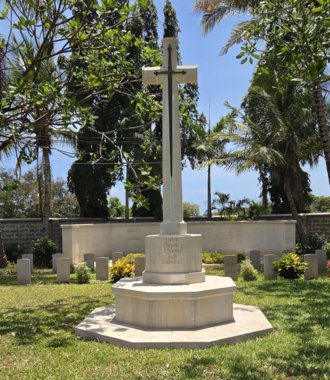
In Tanzania, Phillip Manzi (Ry. 1983-87) visited the Commonwealth section of Dar es Salaam Cemetery (pictured above), where the groundsman takes personal pride in caring for every grave. Among them is the headstone of Harold Surgey (Ha. 1907-09), who was killed fighting German forces in the East African Campaign during the First World War.
For James Harrison, Brighton College Archivist, the growing number of red poppies on the map reflects something far more meaningful than statistics.
"The transformation of so many grey poppies into red ones on our map shows the extraordinary commitment of the Brighton College community to remembering those who gave their lives. Every visit ensures that a fallen Old Brightonian is not simply a name, but a person whose story continues to be recognised."
He also highlighted the importance of uncovering forgotten stories and locations.
"Finding previously unvisited graves, such as Cecil William Turton's, reminds us that remembrance is an active process. Every new visit, discovery and piece of research helps reconnect today's Old Brightonians with the lives and sacrifices of those who came before them."
The Brighton College Remembers map stands as a powerful visual reminder of what can be achieved when a community comes together with a shared sense of purpose. The many newly red poppies represent not only places visited, but lives remembered. We are deeply grateful to everyone who took the time to honour our fallen OBs this year and encourage others to explore the Remembrance Map and consider visiting a grave or memorial in the future.